Common Paediatric Skin Conditions We Treat
Eczema (Atopic Dermatitis)
Eczema is one of the most common skin conditions in children, characterized by dry, itchy, and inflamed skin. If left untreated, it can cause discomfort and disrupt sleep. We offer specialized eczema treatment plans, including:
- Moisturizing regimens
- Prescription topical treatments
- Allergy testing and lifestyle modifications
Infantile Acne and Baby Rashes
Newborns often develop temporary skin conditions such as baby acne and rashes. While most are harmless, some may require medical attention. Our dermatologists assess and treat conditions like:
- Neonatal acne
- Erythema toxicum
- Cradle cap (seborrheic dermatitis)
Birthmarks and Pigmentation Issues
Birthmarks and skin pigmentation disorders can appear at birth or develop later in childhood. We provide expert diagnosis and treatment for conditions like:
- Port-wine stains
- Café-au-lait spots
- Mongolian spots
- Hypopigmentation and hyperpigmentation disorders
Warts, Molluscum Contagiosum, and Viral Skin Infections
Children are more prone to viral skin infections such as warts and molluscum contagiosum due to their developing immune systems. We offer:
- Cryotherapy (freezing warts)
- Topical treatments
- Laser therapy for persistent cases
Skin Allergies and Contact Dermatitis
Many children experience allergic reactions to skincare products, detergents, or environmental allergens. Our paediatric dermatologists provide:
- Patch testing to identify allergens
- Prescription treatments for severe allergic reactions
- Guidance on avoiding triggers
Fungal and Bacterial Infections
Children often experience fungal and bacterial infections due to their active lifestyles. We diagnose and treat:
- Ringworm (tinea)
- Impetigo
- Scalp infections (tinea capitis)
- Nail fungal infections
Psoriasis in Children
Psoriasis is an autoimmune condition that can affect children, causing red, scaly patches on the skin. At Skin by Dr. Nancy, we provide advanced treatment plans, including:
- Topical therapies
- Phototherapy (light therapy)
- Lifestyle recommendations to reduce flare-ups
Genetic and Rare Skin Disorders
Certain children may be born with genetic skin conditions that require specialized care. We diagnose and manage conditions such as:
- Epidermolysis bullosa
- Ichthyosis
- Xeroderma pigmentosum
Why Choose Skin by Dr. Nancy for Paediatric Dermatology?
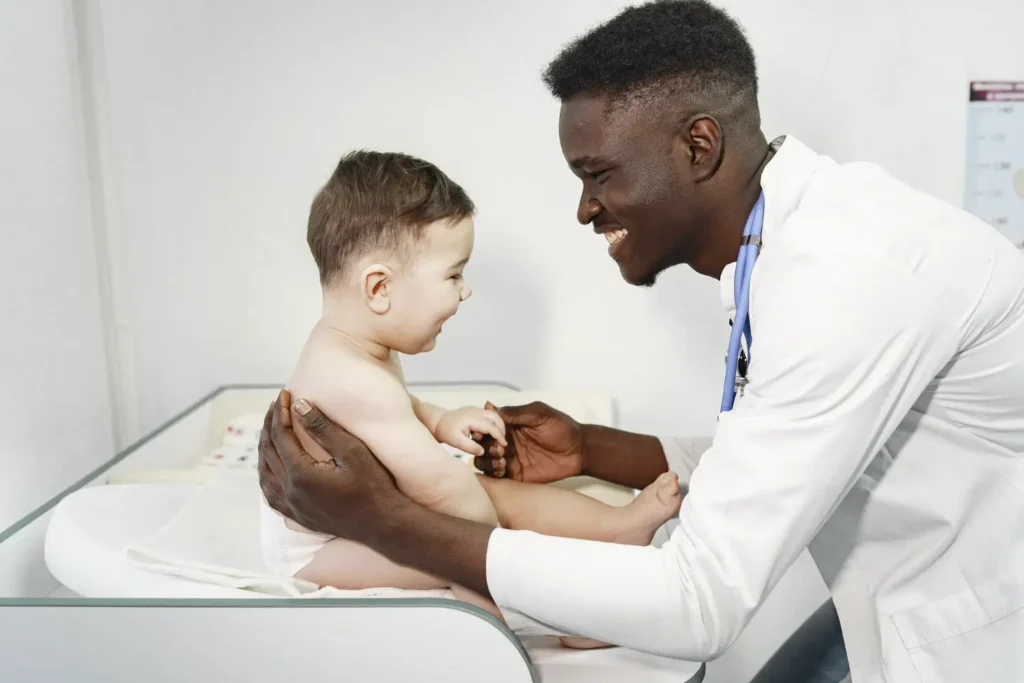
At Skin by Dr. Nancy, we prioritize the comfort and well-being of your child. Here’s why parents trust us for expert paediatric skin care:
- ✅ Experienced Paediatric Dermatologists: Our dermatologists specialize in treating children’s skin conditions with a deep understanding of their unique needs.
- ✅ Child-Friendly Environment: We create a warm, welcoming space to make your child feel comfortable during their dermatology visit.
- ✅ Gentle and Effective Treatments: We use safe, scientifically proven treatments suitable for delicate skin.
- ✅ Personalized Treatment Plans: Every child is unique, and so is their skin. We offer customized treatment plans tailored to their condition.
- ✅ Advanced Diagnostic and Treatment Techniques: From state-of-the-art diagnostic tools to the latest treatment options, we ensure the best possible care for your child.
Paediatric Skincare Tips for Healthy Skin
As parents, ensuring your child’s skin stays healthy requires proper care. Here are some essential skincare tips:
- Use Gentle Cleansers: Avoid harsh soaps and opt for fragrance-free cleansers designed for sensitive skin.
- Moisturize Daily: Keeping your child’s skin hydrated helps prevent dryness and irritation.
- Sun Protection is Key: Always use a broad-spectrum sunscreen to protect delicate skin from harmful UV rays.
- Avoid Over-Bathing: Excessive bathing can strip the skin of natural oils, leading to dryness.
- Choose Hypoallergenic Products: Ensure skincare and laundry products are free from harsh chemicals and allergens.
- Monitor Skin Changes: If you notice persistent rashes, irritation, or unusual skin changes, consult a paediatric dermatologist.
The conditions we see most in children
Children’s skin is not adult skin scaled down – conditions present differently, and treatments have to account for thinner skin and a smaller body.
| Condition | What parents usually notice | Direction of treatment |
|---|
| Atopic eczema | Dry, itchy patches; disturbed sleep; scratching | Emollients plus a written flare plan – see eczema treatment |
| Ringworm | A spreading ring, often from school or a pet | Confirmed by scraping, then treated properly |
| Impetigo | Golden crusted sores, spreading quickly | Prompt treatment; spreads easily between siblings |
| Molluscum | Small pearly bumps that multiply over months | Often self-limiting; treated when spreading or troublesome |
| Papular urticaria | Intensely itchy bumps after being outdoors | Insect-bite reaction – frequently mistaken for chickenpox |
| Birthmarks | Present at birth or appearing in early weeks | Assessment; some need monitoring, some treatment, most neither |
How appointments are run for children
A frightened child cannot be examined properly, and a child who has been held down once is harder to examine for years afterwards. So the approach is deliberately unhurried:
- A parent stays in the room throughout.
- Nothing is done to a child without explaining it to them first, in words they understand.
- Examination starts with an uninvolved area so the child knows what to expect.
- Where a procedure is genuinely needed, it is explained honestly rather than disguised – children handle “this will sting for a moment” far better than a surprise.
What to bring
- Every product used on the child’s skin, including anything from a relative, a chemist or a salon
- Photographs of the rash at its worst – children’s rashes have a habit of settling on appointment day
- A note of how it affects sleep, school and play, which genuinely changes how firmly we treat
- Details of siblings or classmates with anything similar
- Any family history of eczema, asthma or hay fever
A note for parents about steroid creams
Two things go wrong with children’s eczema, and they pull in opposite directions. One is using a potent steroid on delicate skin for months without supervision. The other – far more common in practice – is being so frightened of steroids that the eczema is never treated properly, so the child scratches, sleeps badly and the skin stays broken.
Used correctly, for the right length of time, in the right amount, on the right areas, these are safe and effective. You will be shown exactly what that means for your child rather than left to guess.
Paediatric dermatology – questions parents ask
My child scratches all night. What can I do tonight?
Cool the room, keep nails short, use cotton clothing and apply plenty of emollient before bed. Those help, but persistent night scratching means the eczema is undertreated – it is worth being seen rather than managing it indefinitely.
Is it something I did, or something in the diet?
Almost never. Eczema is largely genetic and environmental. Food plays a part in a minority of infants with moderate to severe disease, and cutting out foods without good reason risks nutrition without helping the skin.
Can my child go to school with this?
Eczema and psoriasis are not contagious and should never keep a child at home. Impetigo, ringworm and scabies are transmissible, and you will be told exactly when it is safe to return.
Will my child grow out of it?
Many do improve substantially by their teens. That is not a reason to leave it untreated in the meantime – lost sleep and broken skin have costs of their own.
How young is too young to be seen?
Babies are seen from the newborn period onwards. If anything about a newborn’s skin worries you, it is a reasonable thing to have looked at.
When a child’s skin problem needs attention sooner
Most children’s rashes are not urgent. These are the ones worth bringing forward rather than waiting for a routine slot:
- A rash with fever, or a child who is unwell in themselves
- A rash that is spreading quickly over hours rather than days
- Blistering, or skin that is peeling away
- Any rash involving the eyes, mouth or genitals
- A newborn with widespread skin changes
- Skin that is hot, swollen and increasingly tender, which can signal infection spreading
If any of those apply, say so when you call and the appointment will be brought forward.
Skin care basics for children in Nairobi
Most childhood skin trouble is made better or worse by a handful of ordinary habits. Short warm baths rather than long hot ones, a plain non-foaming cleanser instead of antiseptic or heavily fragranced bars, and moisturiser applied within a few minutes of drying off while the skin is still slightly damp. Step the emollient up before the cold dry stretch from June, not after the skin has already cracked. And use sunscreen on children too – Nairobi’s altitude and equatorial position mean high UV all year, and childhood sun exposure is what accumulates.
Can I use adult creams on my child?
Not without asking. Children absorb topical medication far more readily than adults relative to their size, so both the strength and the amount matter. A cream that is fine on an adult forearm can be too strong for a child’s face.
My child keeps getting ringworm. Why?
Usually a reservoir that has not been dealt with – a family pet, a sibling with untreated scalp involvement, or shared combs and towels. Treating the child repeatedly without finding the source is why it keeps returning.
Teenage skin
Adolescents are frequently the hardest group to get through the door and the most worth treating early. Acne that scars in the teenage years leaves marks that take far longer to address than the acne itself would have. Where possible the consultation is run with the teenager rather than about them, with the parent present but not answering for them – it makes a considerable difference to whether treatment is actually followed at home. See acne treatment.
Do you see children with birthmarks?
Yes. Most birthmarks need nothing more than reassurance and a note of what to expect as the child grows. A minority benefit from early assessment, so having one looked at is reasonable even when you suspect it is harmless.
Book an Appointment for Expert Paediatric Dermatology Care
At Skin by Dr. Nancy, we are committed to providing exceptional paediatric dermatology services to keep your child’s skin healthy, comfortable, and beautiful. Whether it’s a minor rash or a chronic skin condition, our specialists are here to help.
📅 Schedule a consultation today and let us take care of your child’s dermatological needs!
📍 Location: Applewood, Adams Arcade
📞 Call Us: 0728 566990
📧 Email: info@skinbydrnancy.com
🌍 Visit Us: Skin by Dr. Nancy